Walking onto a golf course for the first time feels scary. You see people with huge bags full of shiny sticks. You hear strange words like driver, wedge, and putter. You start asking yourself - what do I actually need?
I have been there. Standing in a golf store, looking at hundreds of different items, feeling lost. The truth is, you do not need everything they sell. You just need the right Best golf equipment to start playing and having fun.
Let me help you figure this out. No fancy words. No confusing advice. Just real talk about what works.
Understanding Golf Equipment Basics
Before you spend any money, you need to know what each piece does. Golf equipment falls into a few simple groups. Each group has one job. When you know these jobs, buying becomes much easier. Think of it like cooking. You need different tools for different dishes. A knife does not do what a pan does. Same idea here.
Here is what every piece of golf equipment does for you:
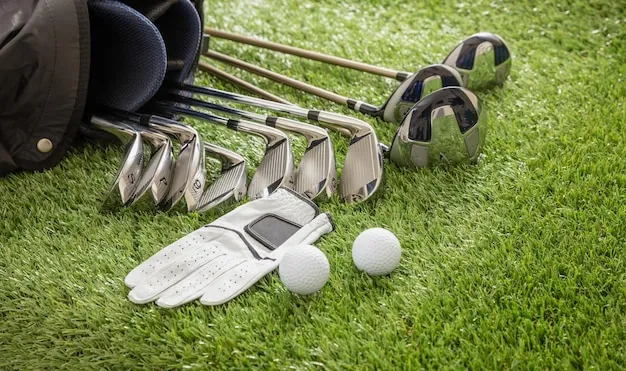
- Clubs - These hit the ball. Different clubs send the ball different distances and heights
- Balls - These get hit. Some fly farther. Some spin more. Some feel soft
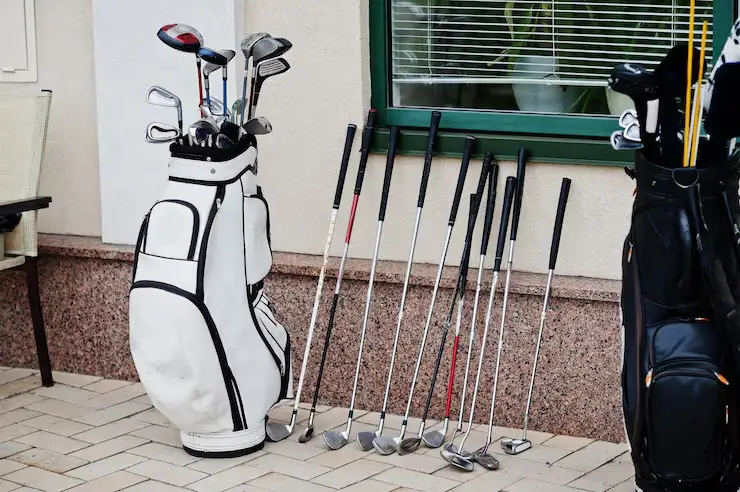
- Bags - These carry your clubs around the course
- Apparel - These keep you comfortable and dry while you play
- Footwear - These keep you stable when you swing
- Accessories - These help with small problems like dirty clubs or lost balls
Simple, right? Now let me break down each part so you know exactly what to look for.
Overview of Golf Equipment Categories
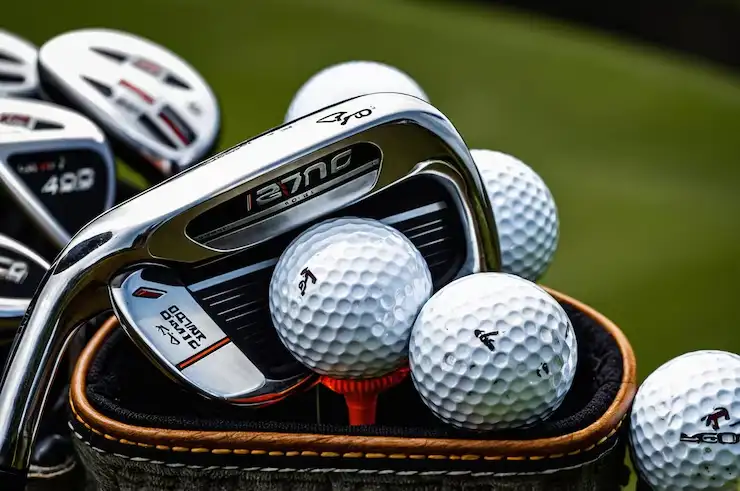
Let me walk you through the main types of golf equipment you will see in any store. I will tell you what each thing does and whether you truly need it.
You may also read :- Finding the Best-Rated Golf Equipment Brands For You
Golf Clubs by Type
Drivers - Biggest club in your bag. Has the largest head. You use this off the tee on long holes. It sends the ball the farthest - sometimes over 200 yards.
Fairway Woods - Smaller than drivers but still big. Numbered like 3-wood, 5-wood, 7-wood. Good from the ground or tee. Easier to hit than drivers for most people.
Hybrids - These mix wood and iron features. They look like small woods. Very easy to hit. Great for beginners and high handicappers.
Irons - Numbered from 4-iron through 9-iron. Lower numbers go farther but are harder to hit. Higher numbers go shorter but are easier to hit. Most players use irons for approach shots into greens.
Wedges - Extraordinary irons with more hang. Utilized for brief shots close the green or out of sand. Common wedges are pitching wedge, sand wedge, and hurl wedge.
Putters - Utilized on the green. You roll the ball along the ground toward the gap. This club gets utilized more than any other in your sack.
Golf Balls
Balls come in different layers and feels. Two-layer balls go far and feel firm. Three-layer balls spin more and feel soft. As a beginner, buy cheap two-layer balls. You will lose them. Everyone does.
Golf Bags
Three main types:
- Carry bags - Lightweight, few pockets, straps for your shoulders
- Stand bags - Similar to carry bags but have legs that pop out
- Cart bags - Heavy, many pockets, designed to sit on a golf cart
Golf Apparel
Shirts, pants, shorts, coats, rain suits. Most courses need collared shirts and no denim. But do not push almost looking like a professional. Fair be comfortable and neat.
Golf Footwear
Spiked or spikeless shoes. Spikes grasp more in damp grass. Spikeless work fine for dry days and strolling. Both keep you from slipping when you swing.
Accessories
Gloves, tees, ball markers, divot devices, rangefinders, umbrellas, towels, headcovers. Decent to have but not required to begin.
Essential Clubs for New Golfers
Here is where most people get confused. They think they need 14 clubs because that is the limit. You do not. You need maybe 6 to 8 clubs to start.
Let me give you a starter set that works:
| Club Type | Loft/Angle | What It Does For You |
|---|---|---|
| Driver or 3-wood | 10-15 degrees | Tee shots on long holes |
| 5-iron or 5-hybrid | 25 degrees | Medium length shots |
| 7-iron | 32 degrees | Approach shots to green |
| 9-iron | 40 degrees | Short approach shots |
| Sand wedge | 54-56 degrees | Out of bunkers and close chips |
| Putter | Varies | On the green only |
That is six clubs. You can play any course with these six clubs. Many people do.
When I started, I carried only a 3-wood, 5-iron, 7-iron, pitching wedge, and putter. I shot the same scores as my friends with full sets. The clubs do not make the player. The player makes the player.
Why fewer clubs help you learn:
- You learn each club better
- You carry less weight
- You spend less money
- You make fewer decisions on the course
- You build confidence faster
Once you play for six months, add clubs one at a time. See what shots you miss. Buy that club next.
Tips for Choosing Your First Set
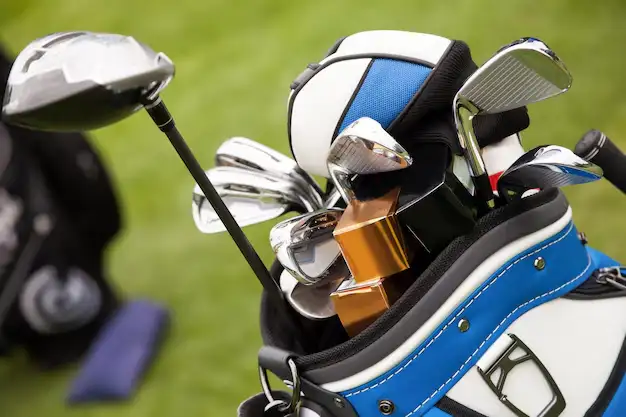
Buying your first golf equipment can cost a lot or a little. It depends on your choices. Here is what I learned after buying three different sets over the years.
New vs Used
Used clubs save you huge money. A three-year-old driver works almost as well as this year's model but costs half the price. Many used clubs look nearly new because the previous owner barely played.
Where to find good used clubs:
- Golf store trade-in racks
- Play It Again Sports
- Local golf course pro shops
- Friends who just bought new clubs
Complete Boxed Sets
Big brands sell complete sets in one box. Driver, woods, irons, wedges, putter, and bag all together. Prices range from $200 to $800.
These sets work great for beginners. Everything fits together. Nothing missing. You just open the box and play.
Good boxed set brands:
- Wilson
- Callaway (Strata line)
- Tour Edge
- Top Flite
- Pinemeadow
Getting Fitted
Do not pay for a fancy club fitting as a beginner. Your swing will change so much in the first year. What fits you today will not fit you in six months.
Wait until you break 90 consistently. Then get fitted. Until then, buy standard length and regular flex shafts.
What Flex Means
- Ladies flex - Very slow swing speed
- Senior flex - Slow swing speed
- Regular flex - Average swing speed (most beginners)
- Stiff flex - Fast swing speed
- Extra stiff - Very fast swing speed
Most men start with regular flex. Most women start with ladies flex. Do not overthink this.
Importance of Apparel
You might think clothes do not matter. But golf apparel serves real purposes beyond looking nice.
Why proper golf clothes help:
- Moisture-wicking shirts keep you dry when you sweat
- Stretchy pants and shorts let you move freely in your swing
- Rain gear keeps you playing when weather turns bad
- Layered pieces let you adjust to changing temperatures
- Sun protection fabrics save your skin on long days
You do not need expensive brands. Target and Walmart sell perfectly fine golf shirts for $20. Old Navy has golf pants for $25. Amazon Basics makes solid rain jackets.
What to avoid wearing:
- Jeans (restrict movement and many courses ban them)
- Tank tops (not allowed at most courses)
- Gym shorts (too casual for most places)
- Sandals or flip-flops (dangerous and not allowed)
A simple rule - wear what you would wear to a casual lunch at a nice restaurant. Collared shirt. Clean shorts or pants. Comfortable shoes.
Who Makes the Best Golf Equipment
This question gets asked all the time. The honest answer? No single company makes the best everything.
Different brands lead in different categories. Let me break it down simply.
| Brand | Best For | Why Players Like Them |
|---|---|---|
| Titleist | Golf balls and wedges | Very consistent quality, tour proven |
| Callaway | Drivers and irons | Easy to hit, very forgiving |
| TaylorMade | Drivers and woods | Long distance, modern look |
| Ping | Irons and putters | Extremely forgiving, lasts forever |
| Cleveland | Wedges | Great feel at lower prices |
| Odyssey | Putters | Alignment aids really work |
| Cobra | Value and forgiveness | Good tech for less money |
| Mizuno | Irons feel | Softest feeling irons made |
| Wilson Staff | Complete beginner sets | Best value for money |
| FootJoy | Golf footwear and gloves | Most comfortable, most durable |
For a beginner, I recommend Wilson for complete boxed sets. Callaway or TaylorMade if you have more money to spend. Titleist for balls once you stop losing many.
But here is the truth - the best golf equipment is the equipment you can afford and feel confident using. Brand names do not lower your score. Practice does.
Finding the Perfect Golf Footwear
Your feet connect you to the ground. If your feet slip, your shot goes bad. Good golf footwear stops that from happening.
Spiked vs Spikeless Shoes
Spiked shoes have plastic cleats screwed into the bottom. These dig into the grass. You feel very stable. But they can feel hard on concrete and cart paths.
Spikeless shoes have small rubber nubs molded into the sole. They grip grass well enough for most days. They feel like regular sneakers. You can wear them to the clubhouse and driving range without changing shoes.
For beginners, I suggest spikeless shoes. Here is why:
- More comfortable for walking 18 holes
- No cleats to replace when they wear down
- Work on and off the course
- Cost less than spiked models
- Still grip well in dry conditions
Good budget golf footwear brands:
- New Balance (great for wide feet)
- Skechers (very comfortable)
- Adidas (solid all-around)
- Puma (stylish and affordable)
- Asics (good for walking)
What to look for when buying:
- Waterproof or water-resistant upper
- Cushioned insole for walking
- Roomy toe box (your feet swell when walking)
- Heel that does not slip
- Traction pattern that feels grippy
I bought Skechers Go Golf shoes for $65 three years ago. Still wear them. Still dry. Still comfortable. You do not need $200 FootJoys.
Golf Bags and Accessories
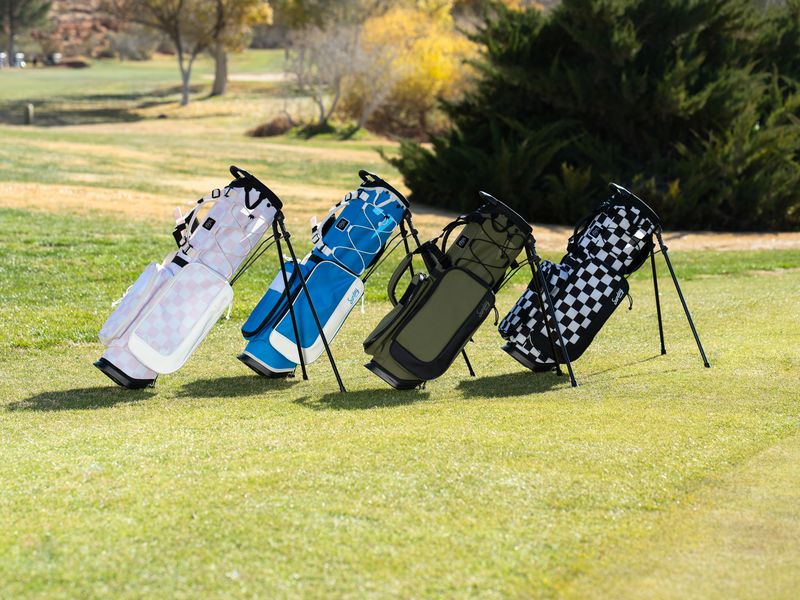
Your golf bag holds everything together. Pick the wrong bag and you will hate carrying it. Pick the right bag and you barely notice the weight.
Types of Bags Compared
| Bag Type | Weight | Best For | Pros | Cons |
|---|---|---|---|---|
| Carry bag | 2-4 lbs | Walking, few clubs | Very light, cheap | Few pockets, no stand |
| Stand bag | 4-6 lbs | Walking, full set | Has legs, many pockets | Costs more than carry bags |
| Cart bag | 6-10 lbs | Riding carts only | Huge storage, sturdy | Heavy to carry |
| Tour bag | 10+ lbs | Pros only | Looks impressive | Too heavy, too expensive |
For most beginners, buy a stand bag. Light enough to carry. Holds everything you need. Legs keep it off wet ground. Costs $100 to $150 for a good one.
Accessories You Actually Need
Stores sell hundreds of accessories. Here is what matters and what does not.
Must-have accessories:
- Golf towel - Wipe dirt off your clubs and ball
- Divot tool - Fix ball marks on greens (courses expect this)
- Ball markers - Mark your ball's spot on the green (a coin works fine)
- Sunscreen - You will be outside for hours
- Water bottle - Stay hydrated or you will play badly
Nice to have but not needed:
- Rangefinder or GPS watch
- Club brush
- Umbrella
- Rain hood for bag
- Headcovers for woods
Do not waste money on:
- Club cleaning kits (a wet towel works)
- Swing analyzers (apps on your phone do the same)
- Fancy ball markers (use a penny)
- Alignment sticks (use two clubs from your bag)
How Many Balls to Carry
Beginners lose balls. Many balls. Carry at least 12 balls for 18 holes. I lost 8 balls my first time playing a full round. Do not be the person asking to borrow balls on hole 14.
Buy recycled or refurbished balls to save money. Websites like LostGolfBalls sell nearly new balls for half price. Grade AAAA means almost perfect condition.
Frequently Asked Questions
How much should I spend on my first set of golf equipment?
Between $200 and $500 for a complete starter set. Used sets cost even less - sometimes $100 to $300. Do not spend more until you know you love playing.
Do I need a glove?
Not required but helpful. Gloves stop the club from twisting in your hands. Buy one for your lead hand (left hand for right-handed players). Cost is $10 to $20.
How long do golf clubs last?
Good clubs last 10 years or more with basic care. Drivers improve slowly. Irons change very little year to year. Do not chase new models.
Should I buy women's specific golf equipment?
Women's clubs are lighter, shorter, and more flexible. If you are an average sized woman, yes buy women's clubs. If you are tall or strong, try senior flex men's clubs first.
What is the best way to clean golf equipment?
Warm water. Soft brush. Mild soap. Dry with towel. Never put clubs in dishwasher or use metal brushes on club faces.
Final Thoughts
Golf equipment does not need to be complicated. You do not need the newest driver or the most expensive balls. You need reliable gear that fits your budget and gets you on the course. Start small. Buy used or buy a boxed set. Play with fewer clubs. Learn what you like and what you do not. Then add pieces over time.
The best golf equipment in the world will not fix a bad swing. But the right equipment for your skill level will make learning easier and more fun. And that is what matters most.