When you play golf, you will not hit every green. That is a fact. Even the best players in the world miss the green. When you miss the green, you need to get the ball onto the putting surface. You need a short, low shot that rolls toward the flag. That shot is called a chip shot.
Many people think golf is only about driving the ball far. But the real score improvement comes from the small shots around the green. If you learn good golf chipping instruction, you will save many strokes. You will stop making double and triple bogeys. You will feel calm when you stand just off the green.
What is a chip shot in golf?
A chip shot is a short shot. You use it when you are close to the green but not on it. The ball stays low to the ground. It flies for a short time. Then it lands and rolls like a putt. The roll is longer than the flight.
Many new players try to lift the ball in the air. That is a mistake. A chip shot is not a high shot. It is a low running shot. Think of it as a long putt that happens to go over a little bit of grass first.
When you chip, the ball rolls toward the hole. Rolling is easier to control than flying. That is why good chipping is the fast way to lower your scores.
You may also read :- Best Golf Instruction: Improve Your Swing Faster with Proven Tips
Golf Chipping Tips for Beginners
If you are new to golf, chipping can feel scary. You see the flag close by. You want to get the ball there. But your hands feel tight. Your body does not know what to do. Here are simple golf chipping tips for beginners that work right away.
Use Your Putting Grip
Do not change your grip for a chip shot. Hold the club the same way you hold your putter. Put your hands together. Keep your palms facing each other. Do not let your wrists move much. This simple grip takes away the fear of missing the ball.
Keep Your Weight on Your Front Foot
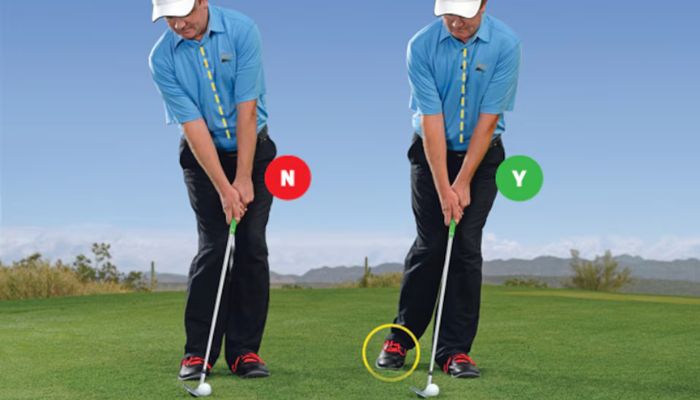
Most beginners put their weight on the back foot. That makes the club go under the ball. The ball pops up and goes nowhere. To fix this, put 70 percent of your weight on your front foot. Your front foot is the left foot for right handed players. Keep that weight there the whole swing. Do not shift back.
Move the Club Like a Pendulum
A chip shot is not a big swing. You do not turn your shoulders a lot. You move the club back a short way. Then you move it forward a short way. The motion comes from your chest and shoulders. Your hands stay quiet. Think of a clock pendulum swinging back and forth. Short and smooth.
Pick One Club and Learn It
Do not use five different clubs for chipping. Pick one club. A pitching wedge is good. A gap wedge is fine. Even an 8 iron works. Use that same club every time. Learn how far the ball rolls with that club. When you know one club well, you can chip close to the hole from many spots.
Golf Chipping Tips for Seniors

As we get older, our bodies change. We do not swing as fast. Our hands may not be as strong. Our back may not turn the way it used to. But that does not mean you cannot chip well. In fact, chipping becomes even more important for seniors. Here are golf chipping tips for seniors that respect your body while helping your score.
Use More Loft to Carry Hazards
If you are a senior player, you may have trouble getting the ball to roll over uneven ground. A simple fix is to use a club with more loft. A sand wedge or a lob wedge works well. The ball goes up a little higher. It comes down softer. This helps you carry over thick grass or a small bunker. Then the ball stops near the hole.
Widen Your Stance for Balance
Balance matters more as we age. A narrow stance makes you feel wobbly. Stand with your feet a little wider than your shoulders. This gives you a solid base. You will not sway during the swing. A wider stance also lowers your center of gravity. That means more control with less effort.
Shorten Your Backswing
Many seniors think they need a big backswing to get the ball moving. That is not true. A chip shot needs almost no backswing. Bring the club back until your hands are just past your back thigh. That is enough. A short backswing keeps the shot simple. It also saves your lower back from too much twisting.
Use a Lighter Grip Pressure
When your hands are tired, you grip too hard. Hard hands do not feel the club face. Soft hands do. Hold the club gently. Think of holding a tube of toothpaste with the cap off. You want to squeeze just enough so it does not fall. That light grip helps you feel the shot. You will not hit the ball fat or thin.
How to Chip a Golf Ball Consistently
Consistency is the dream of every golfer. You want every chip to go the same way. You want to know before you swing that the ball will end up close. Learning how to chip a golf ball consistently is not magic. It is about doing the same small things every single time.
Set Up the Same Way Each Time
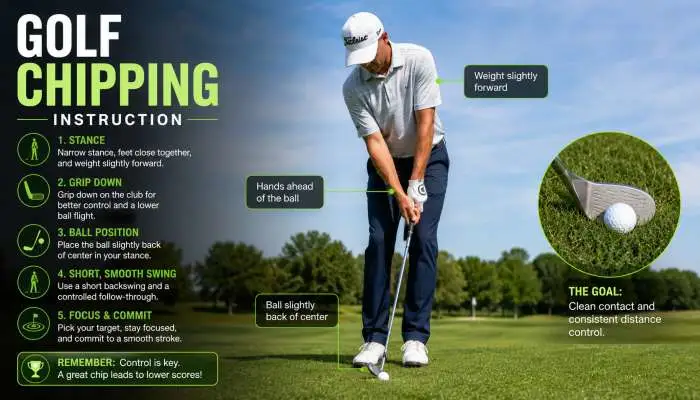
Consistency starts with your setup. Stand with your feet close together. The ball is in the middle or slightly back in your stance. Your hands are ahead of the ball. Your front hand pushes just a little toward the target. This hand position makes the club hit down on the ball. That is good. That is how you get a clean strike.
Control Distance with Swing Length
Many players try to control distance by swinging harder or softer. That does not work well. Hard swings make you tight. Soft swings make you scared. The better way is to change the length of your swing.
For a short chip that goes ten steps, bring the club back to your back foot. For a longer chip that goes twenty steps, bring the club back to your back knee. For a very long chip that goes thirty steps, bring the club back to your back hip.
Notice the pattern. Longer swing length means longer shot. The speed of your swing stays the same. Smooth and steady. Only the length changes.
Keep Your Lower Body Still
Your legs do not move in a chip shot. Your hips do not turn. Your knees stay where they are. Only your chest and arms move. If your legs move, the low point of your swing moves. That is bad. The low point needs to stay in the same spot. That spot is just in front of the ball. A still lower body gives you that steady low point every time.
Hit Down to Make the Ball Go Up
This sounds wrong but it is true. To make the ball go up in a chip shot, you must hit down. The loft of the club sends the ball up. You do not need to scoop or lift. When you hit down, the club face touches the ball first. Then the club touches the ground. That clean contact gives you a consistent result every single time.
Golf Chipping vs Pitching

A lot of golfers do not know the difference between chipping and pitching. They use the words like they mean the same thing. But they are different shots. Knowing golf chipping vs pitching helps you pick the right shot for the right moment.
The Chip Shot
A chip shot is low and runs far. The ball is in the air for a short time. The ball rolls for a long time. You use a chip shot when you have no trouble between you and the green. For example, you are just off the green in the short grass. The flag is twenty steps away. A chip shot works best here.
The stance for a chip is narrow. Your weight is on your front foot. Your hands are ahead of the ball. The swing is short and low to the ground.
The Pitch Shot
A pitch shot is higher and runs less. The ball is in the air for a long time. The ball stops quickly when it lands. You use a pitch shot when there is trouble between you and the green. For example, a bunker or a patch of thick grass. The ball needs to go over that trouble. Then it lands soft and stops.
The stance for a pitch is wider. Your weight is more even. Your hands are not as far ahead. The swing is longer and more up and down.
How to Choose
Ask yourself one question. Can the ball roll to the hole without hitting trouble? If yes, chip. If no, pitch. That simple question saves you from bad shots. Most weekend golfers pitch when they should chip. They lose strokes because the high shot is harder to control. When in doubt, chip. Let the ball roll.
How to Chip a Golf Ball and Make It Stop
Sometimes you want the ball to stop close to the hole. You do not want it to roll past. You want to land the ball near the flag and have it sit down. Learning how to chip a golf ball and make it stop is a great skill. But you need the right club and the right technique.
Use a Higher Lofted Club
A pitching wedge or a 9-iron makes the ball roll a lot. That is good for long chips. But for stopping, you need more loft. Use a sand wedge or a lob wedge. These clubs have 54 to 60 degrees of loft. The extra loft makes the ball go higher. It lands softer. It does not roll far.
Land the Ball on a Soft Spot
The ball will stop faster if it lands on soft ground. Look at the green. Is the ground soft and wet? It will hold the ball. Is the ground hard and dry? The ball will bounce and roll. Aim to land the ball on a softer looking patch. Avoid landing on a down slope. Down slopes push the ball forward.
Hit the Ball Cleanly with No Grass Between
To make the ball stop, you need a clean hit. The club face must touch the ball directly. No grass in between. This is called a clean strike. When you hit it clean, the grooves on the club face grab the ball. The ball spins a little. That spin makes it stop. If you hit the grass first, the ball slides and keeps rolling.
Do Not Try Too Much Spin
Do not try to make the ball spin backwards. That is a very hard shot. Even good players do not spin the ball back often. Just try to make the ball land and stop within a few feet. That is good enough. A chip that stops three feet past the hole is better than a chip that spins back twenty feet.
Golf Chipping Stance
Your stance is the floor of your swing. If your floor is weak, your swing is weak. A proper golf chipping stance gives you a strong base. It also puts your body in the right position to hit the ball cleanly.
Feet Close Together
Stand with your feet about shoulder width for full swings. For chipping, bring your feet closer. Your heels should be about six to eight inches apart. A narrow stance keeps your hips from turning too much. It also makes it easy to keep your weight forward.
Ball Position Slightly Back
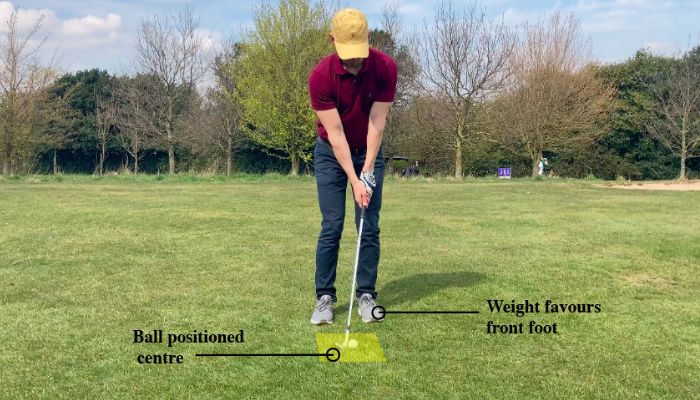
Where do you put the ball? For a chip shot, put the ball just behind the middle of your stance. If your feet are close together, the middle is easy to find. Move the ball one or two inches toward your back foot. This ball back position helps you hit the ball first. It also keeps the shot low.
Hands Ahead of the Ball
Push your hands a little toward the target. Your front hand should be even with your front thigh. Your back hand is behind it. The club shaft leans forward. This lean takes the bounce off the club. It helps the club cut into the ground after the hit. This is a key part of the chipping stance.
Weight on the Front Foot
Put most of your weight on your front foot. Your front foot is the one closer to the target. Lean your body so your front shoulder is lower than your back shoulder. Your front knee is bent a little more than your back knee. This position forces you to hit down on the ball. You will not fall back or scoop.
Eyes Over the Ball
Look down at the ball. Your eyes should be directly over the ball or just inside it. Do not put your eyes behind the ball. That makes you hit the ground first. Do not put your eyes too far forward. That makes you top the ball. Eyes over the ball or slightly ahead gives you the best view of the strike.
How to Chip a Golf Ball from Rough
The rough is the thick grass around the green. It is meant to punish bad shots. When your ball ends up in the rough, you cannot chip the same way as from the fairway. The grass grabs your club. The ball comes out slower. You need a different method for how to chip a golf ball from rough.
Use More Loft
The grass grabs the club. A low lofted club like a 7 iron will get caught. The club face closes. The ball shoots left and low. To avoid this, use a sand wedge or a lob wedge. The extra loft helps the club slide through the grass. The ball goes up faster. It comes out softer.
Grip Down on the Club
Hold the club lower on the handle. Choke down one or two inches. This gives you more control. The club feels shorter and heavier. A shorter club is easier to control in thick grass. You will not get stuck as often.
Make a Steeper Swing
From the rough, you need to hit down harder. Make your swing more up and down. Less side to side. Imagine you are hammering a nail into the ground. That steep angle cuts through the grass. The club reaches the ball cleanly. If you swing too flat, the grass grabs the club and twists it.
Expect Less Roll
The ball will not roll far from the rough. The grass catches the ball and kills the roll. That is okay. Aim to land the ball closer to the hole. Do not try a long running shot. Pick a spot on the green and fly the ball to that spot. Let the ball stop there. You will be closer to the hole than you think.
Take One Extra Club for Distance
The ball comes out slower from the rough. If you normally chip twenty steps with your sand wedge from the fairway, you will get only fifteen steps from the rough. To fix this, use one club less. Use a pitching wedge instead of a sand wedge. Or swing a little longer. But do not swing harder. Swing longer. Hard swings in the rough make the club dig too much.
Final Thoughts
Chipping is not hard. Golfers make it hard by thinking too much. They watch videos. They try fancy moves. They change their swing every week. That is the path to bad scores.
The best golf chipping instruction is simple. Keep your weight forward. Keep your hands ahead. Keep your lower body still. Make a short pendulum swing. Hit the ball first. Let the ball roll.
Practice these steps for ten minutes before each round. Use one club. Hit chips to different flags. Watch how the ball rolls. Learn the feel. Soon you will stand over every chip with calm. You will know the ball is going close. That is how you lower your scores. That is how you enjoy golf more.